Tuesday, June 2, 2020

Writing workshop: "Fundamentals of Fiction"


I recently attended Fundamentals of fiction, a course run by William Ryan at the Irish Writers Centre. I saw it as a chance to workshop some pieces from my current work in progress, a meta-fictional novel about how narrative can contribute to mental health stigma.

The course was run over Zoom. Each week began with a lecture-style presentation from Ryan, covering different aspects of fiction (e.g. dialogue, characters, writing scenes etc.) These covered the basics in some detail - the slides can act as handy checklists when re-drafting.

Furthermore, each week we submitted a 1,000-word extract from fiction we were working on (these could be short, stand-alone pieces or excerpts from a novel). During each class, we reviewed three writers' work in depth. I had an extract reviewed in the first week; opinion was divided over my decision to write in the first-person plural for the scene (although this technique is more popular than you might think). The feedback was particularly useful in finding out what aspects people might like to be developed more.

I previously did a beta-read exchange with someone I met on a different course at the Irish Writers Centre. The other person's book was historical fiction, and quite different in many ways from my own work. The Fundamentals of Fiction was a good opportunity to do something similar; although the participants were generally writing for an adult audience, there was enough variation in genre and setting to keep things interesting. A difficult aspect compared to beta-reading was that when working with extracts from longer works (as opposed to stand-alone pieces) one can't always get the full context of the pieces chosen for the workshop process

This was an enjoyable way to explore writing with other. The atmosphere was friendly, and critique was very constructive. As the title of the course suggests, highly seasoned writers may not get that much out of the four weeks, but for enthusiastic amateurs trying to up their game this is well worth considering. 

Places are still available for the next workshop, starting 16th June.

Related posts
Insider's guide to publishing: Dublin International Literature Festival
Notes on writing process

If you like this post, follow me on Twitter: @ArchivePsych

Tuesday, May 5, 2020

Researcher Profile: Andrew Allen

This profile originally appeared on the website of the Dementia Research Network Ireland, who gave me the opportunity to talk about my new research role at the Trinity Centre for Ageing and Intellectual Disability.

(Re-printed with permission).


This month's researcher in focus is Dr Andrew P. Allen, who works with the Trinity Centre for Ageing and Intellectual Disability at Trinity College Dublin.

What is your area of research?

I have recently started working with Trinity Centre for Ageing and Intellectual Disability. For over a decade, they have been running the Intellectual Disability Supplement to the Irish Longitudinal Study on Ageing (IDS-TILDA: idstilda.tcd.ie). This is generating a fantastic dataset from a nationally representative cohort of people with intellectual disability (ID) aged 40+.

I am particularly interested in dementia in people with ID. This population have a higher prevalence of dementia, and the onset happens at a younger age, but detection of dementia in this cohort is quite different from the general population, and this can be challenging for clinicians. Appropriate end-of-life care for people with ID, another issue that is central to dementia, remains a challenge; I’m also currently working with my colleagues on book chapters that aim to provide a better understanding of the topic.

Right now, with the current COVID-19 crisis, we are developing resources for people with ID, their families and support staff (e.g. easy read materials, webinars for support staff). To find out more, see the following link: https://www.tcd.ie/tcaid/about/covid19.php

What sparked your interest in this area?

I have been interested in cognition for ages, but I’ve become increasingly involved in the whole area of ageing and cognition in the last few years. I have always believed that ageing is an intrinsically interesting topic, but I think the research zeitgeist has also generated a lot of energy around exploring the lives of older adults. So, when the opportunity arose with IDS-TILDA to get involved with research in an underexplored older population, I jumped at it. 

What stage are you at in your career and are there any achievements you are particularly proud of?

I have worked in various research roles since finishing my PhD about seven years ago. I’m approaching what a lot of funding agencies would call “mid-career” - time can creep up on you.

In terms of recent output, I was happy to see a paper being published about research on family dementia caregivers at University College Cork and St. Finbarr’s Hospital. The findings draw attention to the importance of safety issues as a cause of burden for family caregivers of people with dementia. This was a very satisfying collaboration with the clinical team at the memory clinic and old age psychiatry clinic as well (https://academic.oup.com/ageing/article-abstract/49/1/52/5637595).

What impact would you like your research to have?

I think that most researchers involved in ageing are hoping to maintain or improve people’s quality of life as they get older. But not everyone ages in the same way and, as researchers, we have a role to play in creating a better understanding of the diversity that exists in our older populations so that policy and practice can adapt accordingly.

Who has helped or inspired you in your area of research?

In my experience, the teams that I’ve worked with are very collegial, and many team-mates have helped me in some way (I hope I’ve helped them too). I’ve taken a strong interest in psychology since the age of fourteen, so there have been a lot of people who have inspired me. In the last couple of years, Richard Roche has been a particular inspiration with his ability to pull together collaborators from a wealth of disciplines. More recently, I think the scale and the staying power of IDS-TILDA is really impressive, especially how they manage to retain so many participants with very little drop-out. And with such a great dataset, every day raises new questions.

Related posts
Dementia in people with intellectual disabilities

If you like this post, follow me on Twitter: @ArchivePsych

Saturday, April 25, 2020

How does the trick work?


In one of my favourite books of the last decade, Daniel Dennett describes "the tuned deck", based on an account from John Northern Hilliard's 1938 book "Card Magic". This nifty scheme by a certain Ralph Hull confounded professional magicians. Hull would perform one of the simplest tricks in the book. He would ask someone to pick a card from a standard deck of playing cards and place it back in the deck without showing him. Then Hull would produce the correct card that they had picked.

What frustrated his rivals, most of whom could no doubt do this kind of trick in their sleep, is they couldn't work out how he did it. A key aspect of this scheme was that Hull would perform the tuned deck multiple times in front of the same audience, which is generally a no-no for an audience of lay people, let alone other magicians. As far as Hull could make out, no one else ever worked out how to perform the tuned deck.

So how did he do it? The "pick a card, put it back in the deck and I find it" trick is very simple in terms of input and output, but there are multiple mechanisms through which the magician achieves it. The fact that Hull did multiple performances in front of an audience of skeptics was actually key to performing the tuned deck. He would perform the trick one way-(for example, a classic method is glimpsing the card that goes on top of the unseen, chosen card). The other magician would reckon that Hull had used the glimpse, and so when Hull performed the tuned deck again, Hull's rival(s) would act in such a way as to spot or frustrate this method. But this time, they would not be able to catch Hull at glimpsing, because instead of using the glimpse, he would use another method- say, a sleight of hand method for tracking the chosen card by touch. "The tuned deck" was only ever "one" trick in the sense of the input and the outcome, not the mechanism for how it was achieved.

I love this story. Before I could articulate it, I could sense how this could be an analogy for so many blind alleys we lead ourselves down. Dennett uses the tuned deck as an analogy for our understanding of consciousness; the various "easy" problems of consciousness (how do we pay attention, how we remember) are the tuned deck of making up the overall subjective experience of consciousness, thereby explaining the "hard" problem of consciousness, i.e. how we have a general, "unified" stream of consciousness - see work by David Chalmers. (Dennett is not a great fan of Chalmers, as parodied in this enjoyable Philosophy Comic).

Another example we could take is that of major depression and psychotherapy. This is kind of the psychological equivalent of "pick a card, any card". The input and output are relatively simple - person feels down, goes to talk to a professional, hopefully feels better. But there are various schools of therapy - psychodynamic, cognitive behavioural, narrative therapy etc. Many people have pointed out that there are commonalities to most talking therapies (e.g. articulating what's bothering you to an experienced listener), and so the specifics of the particular talking therapy may not be the key mechanism. Furthermore, even a given school of therapy may have a different means of improving mood within different individuals. Maybe it improves self-esteem, maybe it changes your view of the world around you as being fundamentally dangerous, maybe it helps you to view difficult life circumstances in a more positive light.

I can't help but wonder how often those who seek to explain how therapy works fall for the tuned deck.

Related posts
Depression treatment: biological effects
Review: "Intuition Pumps" by Daniel Dennett
What's it like to be me?

If you like this post, follow me on Twitter: @ArchivePsych

Monday, April 13, 2020

Conferences and carbon


My house is burning down but first... let me take a selfie ...

With much of the world in lockdown, many of us have more time on our hands for reflection. The Intergovernmental Panel on Climate Change have indicated that carbon emissions must peak this year. No doubt many countries are inadvertently going to have emissions well below last year's, but will they come back heavier than ever once relative normality returns? (Albeit with a likely economic recession if not depression).

I've recently been trying to make a bid for a US conference to come to Dublin for its once-every-five-years jaunt to Europe. International conferences conferences are a great opportunity for junior and more established researchers and clinicians to build new collaborations. But such events are also wont to chomp up a lot of carbon, with delegates flying the oceans to present their posters, give their talks, and watch the grand dons give their TED talks. Is it really worth the earth?

However, carbon neutral conferences are not only possible, but should be the norm. The article at the link (and cited below) gives a number of clear steps towards reducing emissions. We are all getting more used to virtual meetings, so the number of delegates who travel the world can be reduced, and those who do travel can offset their emissions with carbon credits (less face it, we need carbon capture if we're ever going to beat climate change). Teams should have low-emission options as the default, where people have to "opt-in" to less environmentally friendly choices (carnivore option, anyone?) The supplementary materials in the article also give an estimate of CO2 emissions per activity at a 2018 carbon-neutral conference the authors organised.

Zotova, O., Pétrin-Desrosiers, C., Gopfert, A., & Van Hove, M. (2020). Carbon-neutral medical conferences should be the norm. The Lancet Planetary Health, 4(2), e48-e50.

Related posts
The breadth and depth of research impact
Psychology of climate change scepticism
APS conference: Young Investigator Colloquium

If you like this post, follow me on Twitter: @ArchivePsych

Monday, March 30, 2020

What next?


"If you want to help people, you've come to the wrong place."

Words from a fellow volunteer at a mental health charity. Maybe a lot of psychologists are hung up on trying to change the world, while still ignoring the elephant in the room of global inequity.

A recent tweet has accused mainstream psychology by and large of individualising a largely social phenomenon (i.e. the spread of coronavirus). (It has the near-obligatory reference to ab/using mindfulness as a means to calm the masses down, when they could be energised to change their material conditions). Coronavirus might not care how much money you have, but you're more likely to catch it if you're sharing a rented three-bedroom house with four other lodgers. Indeed, there's been some debate online about the role of behavioural science in general at this time.

Nonetheless, we are all individuals, and practical advice on not touching your face with your hands, reducing cabin fever etc. etc. has utility. But at least we should be careful about trying to save the day when this is a chance for other disciplines (epidemiology, respiratory medicine) to shine.

For those of us who aren't embroiled in the frontline of dealing with the fallout, there's more time for reflection. A re-tweet of the tweet mentioned above suggests that mainstream psychology has not only internalised neoliberalism, but ignored the material conditions around us. When we're all stuck indoors, seeing how our environment conditions can change quite rapidly, this could be a time to consider how we can take more ecological approach to psychology. This need not just apply to critical social psychology, but is relevant for mental health, cognition and other facets of the study of ourselves.

Related posts:
So what? The breadth and depth of research impact
20 questions

You can follow me on Twitter @ArchivePsych

Tuesday, March 24, 2020

Detecting dementia in people with intellectual disability

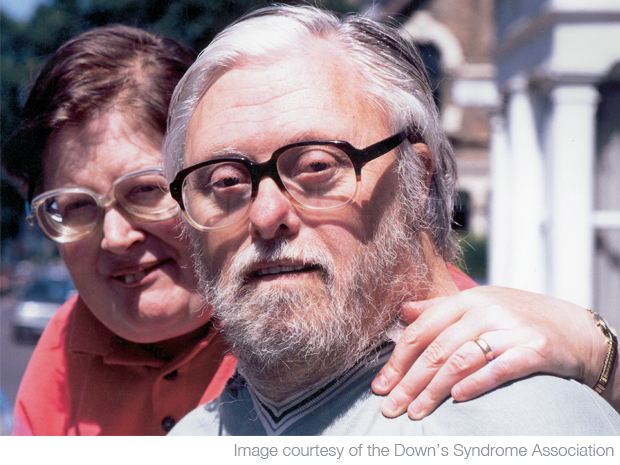
Courtesy of the Down's Syndrome Association


When people hear "dementia", what often springs to mind is a decline in memory in a neurotypical older adult, with this person becoming increasingly dependent upon others as dementia progresses. At the same time, there is a considerably higher prevalence of dementia in people with intellectual disability (ID). Furthermore, the average age of onset of dementia is lower in people with ID.

Cognitive screening assessments for dementia are generally geared towards people without intellectual disability. Even though a patient may have never undergone a cognitive assessment before, typical screening assessments aim to detect a deviation from a presumed baseline level of cognitive performance within an average range. However, this approach is usually inappropriate in ID settings. A plethora of specialised assessments have been produced, and there is now interest in trying to reach some consensus for assessment of dementia in ID. Nonetheless, it is easier to pick up on a decline in cognition if a baseline assessment is conducted with a person with ID prior to any decline.

Matters are further complicated by the fact that many other conditions that associated with ID may lead to worsened performance on cognitive assessments. These include sensory problems and adjustment to life events. There is also a higher prevalence of depression in people with ID. Interestingly, prevalence rates vary according to whether depression is self-reported or rated by a proxy. Depression tends to be lower in the former case; this may be due to proxies overestimating depression levels, but could also be due to other factors that explain both heightened depression and a proxy completing the measure instead of self-report.

People with ID live in the community and also a variety of long-term care settings. Whether or how issues with dementia will be picked up depends upon who the person with ID is interacting with on a daily basis and their level of training. Specialised training has been devised for working with people with ID and dementia, but it is not necessarily received by everyone who will be working with this cohort.

If you're interested in reading more, a handy blog post challenges some of the myths around ID in general and dementia in ID in particular.

Related posts
Book review: "Dignifying dementia"

You can follow me on Twitter @ArchivePsych


Thursday, January 30, 2020

Recall exhibition: Memory, History, Mind


Exciting times-Memory, History, Mind is a new exhibition at the Illuminations gallery at Maynooth University. This exhibition arose out of a multidisciplinary project funded by the Irish Research Council I was working on between 2017 and 2019.

The exhibit draws on reminiscences included in the online archive at the Digital Repository of Ireland. A small selection of highlights from the archive are showcased at the exhibition. We combined stories and photographs provided by research participants with publicly available images of the times and places discussed.

The launch for the exhibition was 29th January. It was great to see so many participants from the research project at the evening. As there were different groups participating in the study, it was a chance for participants to meet others who had taken part in different groups and take in some of the other memories that had been shared throughout the project.

The exhibit wouldn't be possible without these people who shared their memories with us, as well as Dr Caoilainn Doyle who assisted in running the project. Dr Richard Roche put a lot of effort into bringing this all together, and we've had a lot of help from Derek Walsh at the Department of Psychology at Maynooth University in creating the audiovisual material for this exhibit. Thanks are also due to Professor Colin Graham for hosting this exhibition at Illuminations.

The exhibition will run at the Illuminations gallery, Iontas building, Maynooth University, until the 8th March 2020.


Related posts
Revisiting Recall
Thoughts on oral history and psychology
Time out of mind

You can follow me on Twitter @ArchivePsych